Git-Native AI Development: Every Action as a Commit
Discover why traceability in AI-generated code matters. Learn how Orquesta's git-native approach enhances accountability and simplifies rollbacks.
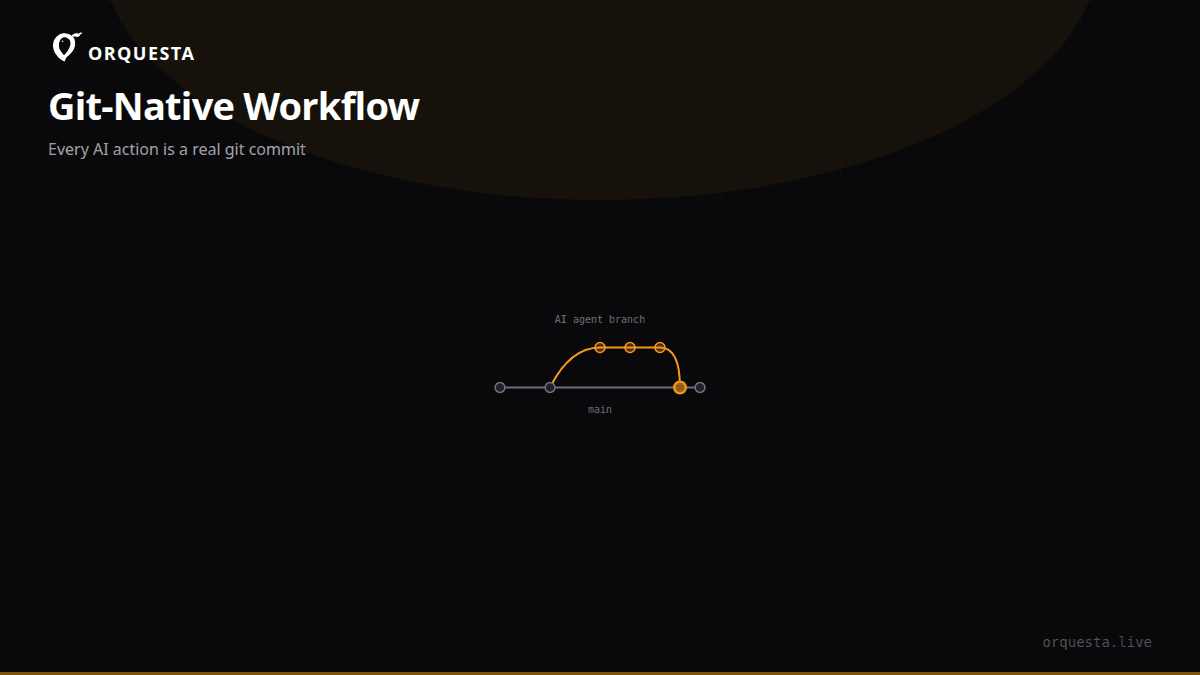
In the rapidly evolving landscape of AI-generated code, ensuring traceability and accountability is paramount. At Orquesta, we've embraced a git-native approach, transforming every AI action into a real git commit. This methodology not only enhances traceability but also fundamentally shifts how we interact with AI-driven development.
The Importance of Traceability in AI-Generated Code
As AI agents increasingly participate in software development, the need for traceability becomes critical. Unlike traditional code written by human developers, AI-generated code can have opaque origins. Without proper tracking mechanisms, understanding the rationale behind specific code changes can become a daunting task.
By treating every AI action as a git commit, we create a transparent history of changes. Each commit carries with it a diff, an author identity, and a timestamp, offering a complete audit trail of modifications. This approach aligns with established software development practices, making AI contributions as traceable as human ones.
Enhancing Accountability
Accountability in software development is not just about knowing who wrote a line of code but understanding the context and intent behind it. With Orquesta, every AI-generated change is a commit that includes:
- Diffs: Immediate visibility into what has changed, allowing teams to quickly assess the impact of AI-generated alterations.
- Author Information: Even though the AI is the "author," this field serves a critical purpose by tying back actions to specific prompts or team members responsible for initiating them.
- Timestamps: Enable tracking the chronology of changes, essential for aligning with project timelines and understanding code evolution.
By embedding these elements into each commit, Orquesta ensures that AI actions are as accountable and reviewable as any human-generated code.
Rollback Made Simple
In any development environment, the ability to revert changes is crucial. Mistakes happen, whether they're made by humans or AI. Git's powerful branching and rollback features become even more valuable when each AI action is a discrete commit.
Real-World Workflow
Consider a scenario where an AI agent is tasked with optimizing several functions within a codebase. The team leads can:
- Review Commit History: Access a linear progression of changes, making it easier to track improvements or pinpoint where things might have gone awry.
- Simulate Code Changes: Using Orquesta's quality gates, AI-simulated changes are validated against coding standards before they're officially committed.
- Rollback with Precision: Should a particular change introduce an error or failed test, reverting the specific commit is straightforward, minimizing disruption.
Here's a typical commit log entry, illustrating how a single AI action is documented:
commit 4f6e9c2
Author: Orquesta AI <ai@orquesta.live>
Date:   Thu Oct 5 14:32:34 2023 +0000

    Optimize data processing functions

    - Refactored processData() to reduce time complexity
    - Introduced caching mechanism for frequent queries
This transparency fundamentally changes the dynamics of AI-driven development, allowing human oversight to be thorough and informed.
Architecture and Implementation
Integrating git-native AI actions into Orquesta wasn't just an afterthought; it was a foundational design choice. Our local AI agent, running Claude CLI, operates directly within your infrastructure. This enables real-time commit generation without the need to rely on external cloud environments.
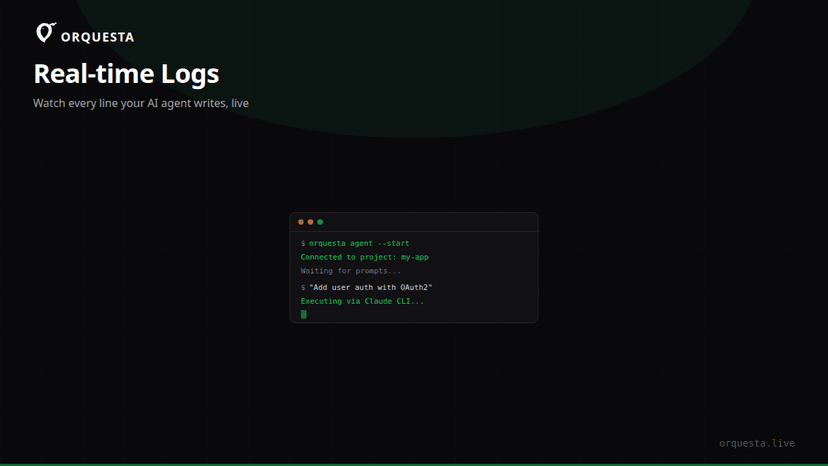
The Agent Grid provides a unified view of these processes, streaming every line of output. This real-time observability further reinforces the role of git in AI development, providing teams with immediate feedback loops.
Conclusion
At Orquesta, we've redefined AI-driven development by ensuring every action is a documented git commit. This approach not only enforces accountability but also simplifies the inherent complexities that come with AI-generated code. By aligning AI actions with established software practices, we enable teams to harness AI's power while maintaining the control and oversight necessary for robust software development.
In a world where AI will only become more prevalent, embracing git-native AI development ensures that our codebases remain transparent, accountable, and resilient.
Ready to ship faster with AI?
Start building with Orquesta — from prompt to production in minutes.
Get Started Free →