Tracing Every Step: The Importance of a Full Audit Trail
Discover why comprehensive logging in AI-driven development is crucial for trust and accountability, covering prompt history, execution logs, and more.
In the realm of AI-driven software development, where machines generate code that can be directly integrated and deployed, maintaining a full audit trail is not just beneficial but essential. At Orquesta, we’ve seen firsthand how crucial it is for teams to have complete visibility into the AI's decision-making process.
The Importance of Comprehensive Logging
When AI writes your code, it’s vital to trace every step. This is more than just a matter of curiosity; it’s about ensuring accountability and building trust in the AI’s outputs. Here’s why logging every action matters:
- Transparency and Trust: Teams need to trust the AI processes creating their code. Complete logs of prompt histories, execution details, and changes allow developers to understand and verify every action the AI takes.
- Accountability: With every action recorded, it’s easier to pinpoint where things went wrong if an issue arises. This audit trail provides a clear path to accountability.
- Cost Management: Tracking token costs and execution times across different stages helps manage resources effectively.
What Constitutes a Full Audit Trail?
A comprehensive audit trail in an AI-driven environment should include several key components:
Prompt History
Every prompt submitted to the AI should be logged. This includes:
- The original text of the prompt
- The timestamp of submission
- The user who submitted the prompt
This ensures that teams can see the exact input that led to a specific AI-generated output.
Execution Logs
Execution logs are vital for understanding what the AI is doing under the hood. These logs should capture:
- Execution mode used (Auto, SSH, Agent, Batuta)
- Step-by-step actions taken by the AI
- Any errors encountered during execution
This detailed logging allows developers to reconstruct the AI’s decision-making process and optimize it for future tasks.
Git Diffs
Incorporating AI-generated code directly into your project requires careful oversight. Logging git diffs ensures that every change is documented:
- A before and after snapshot of the code
- Commit messages explaining the change
This provides a clear record of exactly what the AI altered, facilitating code reviews and team discussions.
Token Costs
Managing computational resources is crucial in AI operations. Tracking the number of tokens used per execution provides insights into resource allocation and cost management.
Activity Feed
An activity feed provides a high-level overview of all operations within the system:
- Who made specific changes
- When these changes were made
- What the outcomes were
This is particularly useful for team leads to monitor progress and for audits to verify compliance with standards.
Implementing a Full Audit Trail in Orquesta
Orquesta’s platform is designed with these logging needs in mind. Here’s how we ensure comprehensive logging:
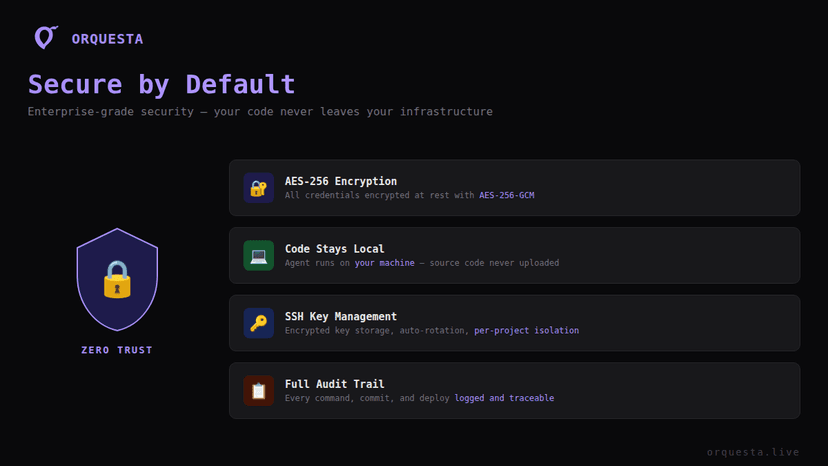
- Local Execution: By running the AI agent locally, we ensure that all logs remain within your infrastructure, respecting privacy and security.
- Claude CLI: Our platform utilizes Claude CLI, allowing integration with local tools and direct access to logs.
- Embedded SDK: With a single script tag, users can embed Orquesta’s logging capabilities into their existing workflows, ensuring seamless operation.
- Role-based Permissions: Only authorized users can access specific logs, maintaining security while allowing transparency.
Practical Example
Consider a scenario where a team prompts the AI to refactor existing code. Here’s a simplified example of how the logging process might look using Orquesta:
{
  "prompt": "Refactor the login module for better performance",
  "execution_mode": "Agent",
  "timestamp": "2023-10-25T14:45:00Z",
  "logs": [
    "Loaded module dependencies",
    "Analyzed function complexities",
    "Suggested optimizations implemented"
  ],
  "git_diff": "commit 123abc456\n- Login logic modified to reduce latency\n+ Optimized database calls\n",
  "token_cost": 150
}
This example illustrates the depth of information captured, enabling the team to review and approve changes confidently.
Conclusion
In an era where AI has increasingly intertwined itself with software development, logging every step is indispensable. It ensures transparency, accountability, and efficient resource management. At Orquesta, we are committed to providing robust logging mechanisms that empower teams to work with AI securely and confidently, knowing that every step is traceable and verifiable.
Ready to ship faster with AI?
Start building with Orquesta — from prompt to production in minutes.
Get Started Free →